What Your Home Is Actually Saying About You (And Whether You Should Listen)
Walk In Like a Stranger
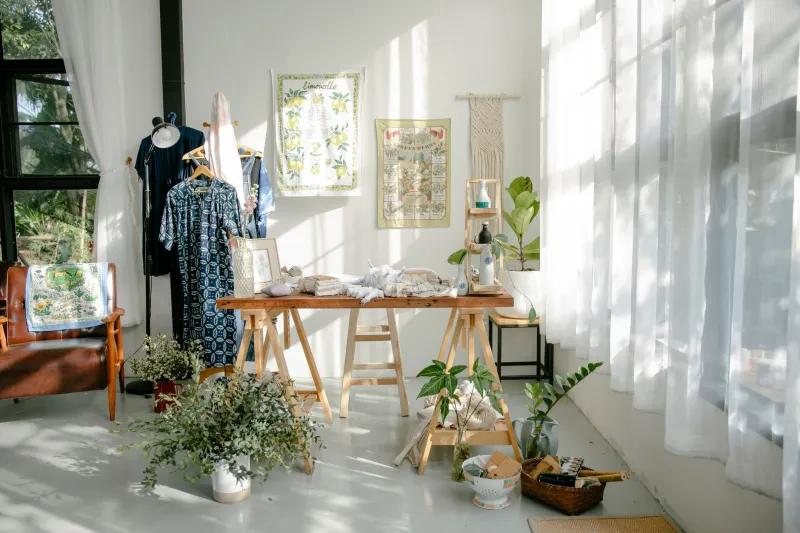
Here's a little exercise I love: walk into your home and try to see it the way someone who's never been there would. Not with fresh eyes exactly, but with honest ones. What does the space communicate? What mood does it set within the first thirty seconds?
Is it calm? Chaotic? Aspirational? Neglected? Cluttered with things you meant to deal with six months ago?
Most of us stop actually seeing our homes pretty quickly after moving in. The stack of mail on the kitchen counter becomes invisible. The empty wall we always meant to hang something on just becomes a neutral backdrop. The bedroom that never quite came together just... is what it is.
But your home is never neutral. It's always communicating something — about your priorities, your mental state, your relationship with yourself. The question is whether you're paying attention.
The Psychology Is Real
Environmental psychology — the study of how our physical surroundings affect our thoughts, feelings, and behaviors — has been building a pretty compelling case for decades. The spaces we inhabit don't just reflect our inner lives; they actively shape them.
Research from Princeton University found that visual clutter competes for our attention and reduces our brain's ability to focus. Studies have linked disorganized home environments to elevated cortisol levels — the stress hormone. On the flip side, spaces with natural light, meaningful objects, and a sense of order have been consistently associated with improved mood and cognitive performance.
In other words: your home isn't just where you live. It's part of how you function.
And yet most of us treat our living spaces as an afterthought — something to deal with eventually, once life slows down. Spoiler: life doesn't slow down. The space doesn't fix itself. And the low-grade friction of living in an environment that doesn't support you quietly accumulates.
What Different Spaces Tend to Reveal
You don't need a therapist to start reading the room (though that's never a bad idea). Here are some common patterns worth noticing:
The perpetually unfinished project. That gallery wall you've been planning for two years. The bedroom that still has moving boxes in the corner. These often point to a deeper ambivalence — either about the space itself, or about putting down roots in a life chapter that still feels temporary. What would it mean to commit?
A home that looks great but doesn't feel like you. Plenty of people have beautiful, Pinterest-worthy interiors that feel oddly hollow in person. If your space looks like it was designed for someone else — or worse, for Instagram — it might be worth asking whose taste you're actually expressing. Style is most powerful when it's personal.
Rooms you avoid. We all have them. The home office that gives you anxiety. The dining table that's become a dumping ground. The corner of the living room that never gets used. Pay attention to avoidance — it usually points to something worth unpacking.
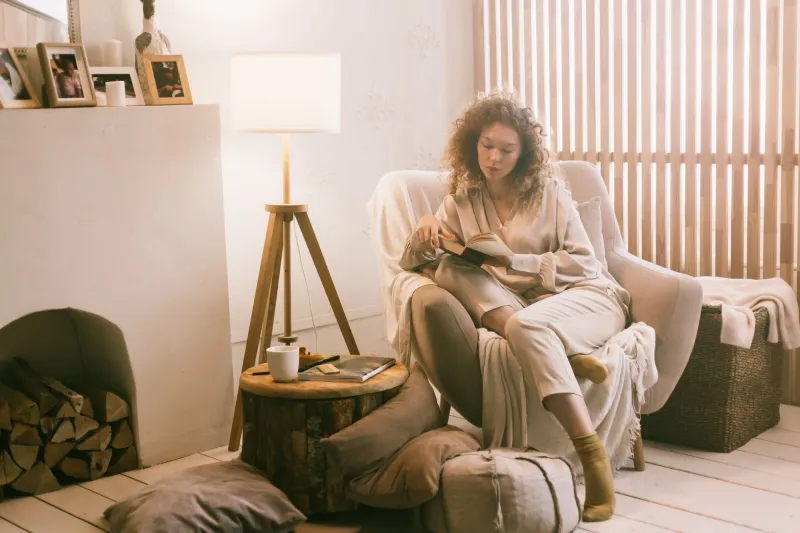
Spaces that feel genuinely good. These matter too. Notice what's working. The morning light in the kitchen that makes your coffee ritual feel luxurious. The reading nook you actually use. The bedroom that genuinely feels like a retreat. What did you do right there, and can you bring more of that energy to the rest of your home?
Designing Your Space Like It Matters (Because It Does)
Here's where I want to push back on the idea that home design is purely aesthetic — a hobby for people with disposable income and a lot of free time. Intentionally shaping your environment is an act of self-care. Full stop.
And it doesn't require a renovation budget or a designer. It requires attention.
Start with function, not form. Before you worry about what your space looks like, ask what you need it to do. Do you need a place to genuinely decompress? A workspace that helps you focus? A kitchen that makes cooking feel like a pleasure rather than a chore? Get clear on the function first, and the form tends to follow more naturally.
Then edit. Most of us have too much stuff, and too much of it is stuff we don't love or use. You don't have to go full minimalist — but getting honest about what's taking up space, visually and physically, is always worth it. Keep what earns its place.
Bring in what grounds you. Meaningful objects, textures that feel good, scents you associate with calm or joy — these are not frivolous additions. They're anchors. A home filled with things that have personal resonance feels fundamentally different from one filled with things that just look fine.
And don't underestimate light. It's probably the single highest-leverage variable in how a space feels. Natural light where you can get it. Warm, layered artificial lighting in the evening. Harsh overhead lighting eliminated wherever possible. Lighting alone can completely transform the emotional register of a room.
Your Home as a Living Document
Here's what I find most interesting about all of this: your home isn't a fixed thing. It's a living document of who you are and who you're becoming. And it can change as you do.
When you go through a major life shift — a move, a breakup, a new job, a shift in values — your space often reflects that transition, sometimes before you've even consciously processed it. The sudden urge to repaint. The desire to clear everything out. The impulse to finally hang that art you've been holding onto.
Those impulses are worth following. They're often telling you something true about where you are and where you want to go.
Your living space is one of the few environments you actually get to control. That's not a small thing. Use it — thoughtfully, personally, and in service of the life you're actually trying to build.