What Nobody Tells You About 'Effortless': Someone Worked Really Hard for That

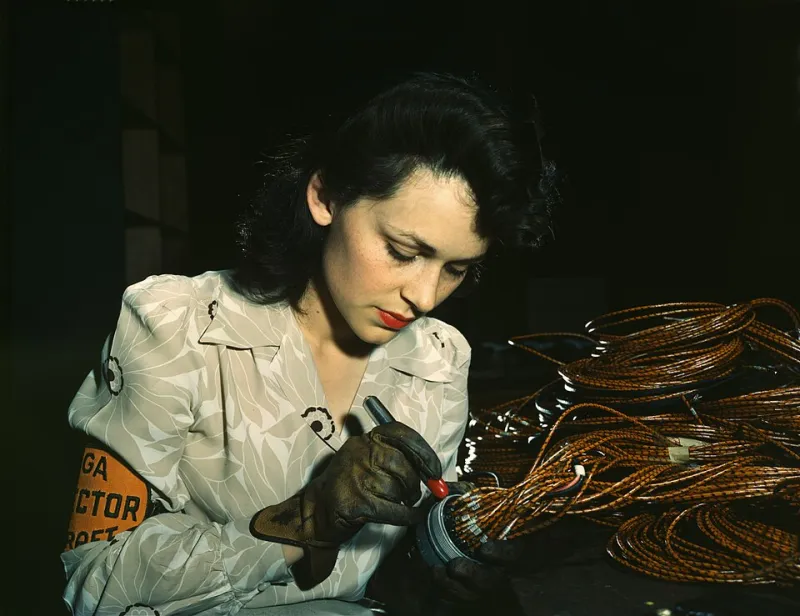
Photo: Harris & Ewing, photographer, Public domain, via Wikimedia Commons
There's a woman in your Instagram feed. Maybe she's a creator, maybe she's just someone you went to college with. Her skin looks dewy without being shiny. Her apartment is warm and lived-in but somehow also editorial. She throws on a linen blazer over a vintage tee and looks like she just stepped off a set in Milan. And the caption? Something like just a slow morning. No big deal. No effort. Just vibes.
And you're sitting there, having also had a slow morning, looking absolutely nothing like that.
Here's the thing nobody's saying out loud: effortless is almost never actually effortless. It's a finish line dressed up as a starting point. And the gap between how easy it looks and how much work went into it is where a lot of our quiet, low-grade self-doubt lives.
The Myth We Were All Taught to Worship
We have a long, complicated cultural love affair with the idea of the natural. The natural beauty. The born talent. The person who just gets it without trying. There's something deeply seductive about the idea that greatness can exist without grind — that some people are just built differently.
But this myth isn't neutral. It's actually doing a lot of work in the background, shaping how we see ourselves and how we judge our own progress. When we believe that the best version of something looks easy, we start to interpret our own effort as a sign that we're not cut out for it. If it were really right for you, wouldn't it come naturally?
Spoiler: no. That's not how almost anything works.
The Invisible Labor Behind the 'Natural' Look
Let's talk about beauty for a second, because it's the most obvious example. The "no-makeup makeup" look — the one that costs you a $68 tinted moisturizer, a $42 brow gel, a specific concealer that matches your undertone, and about 25 minutes of blending — is called natural. The irony is almost too on the nose.
Then there's skincare. The woman with glass skin didn't just drink water and sleep eight hours. She probably has a dermatologist she sees quarterly, a prescription retinoid, a humidifier in her bedroom, and maybe — let's be honest — some pretty favorable genetics. None of that shows up in the "my skincare routine" reel where she pats on three products and calls it a day.
And it's not just beauty. Think about the person whose home always looks casually stylish. That "thrown together" aesthetic was almost certainly the result of hours on Craigslist, an eye trained by years of practice, maybe a design background, and access to thrift stores in neighborhoods where the donations are actually good. The effortlessness is the product. The labor is just hidden.
When 'Natural' Is Actually a Privilege
This is where it gets more uncomfortable, and also more important.
A lot of what reads as effortless is actually the result of very specific resources — money, time, access, and sometimes just the luck of being born into a body or a family or a zip code that gave you a head start. The woman who looks polished at the airport has probably figured out the right carry-on, the right shoes that don't require removal at security, the right blazer that doesn't wrinkle. That knowledge took time and money to acquire. It didn't come from nowhere.
The entrepreneur who built her brand "organically" might have had a safety net that let her go without income for two years. The writer who got their first big break might have had a parent in publishing. The person whose body looks effortlessly toned might have a gym membership, a flexible schedule, and a metabolism that cooperates. None of that is a moral failing on their part. But it's worth naming, because when we don't name it, we absorb it as proof that we're simply not trying hard enough.
What Envy Is Actually Telling You
When you feel that particular sting of envy — the one that comes from watching someone do something you want to do, but better, and with apparent ease — it's worth getting curious about what's underneath it.
Usually, envy isn't really about them. It's about something you want for yourself that feels just out of reach. And the "effortless" part of what you're envying? That's probably not the thing you actually want. You don't want to skip the learning curve. You want the result without the self-doubt that comes with being in the middle of it.
Here's a reframe that's actually helped me: when something looks easy, ask yourself what you can't see. What years of practice are invisible? What resources are off-screen? What support system isn't being credited? Not to tear anyone down, but to give yourself permission to stop measuring your behind-the-scenes against someone else's highlight reel.
The Work You're Doing Is Real (Even When It Doesn't Look Like Theirs)
There's something quietly radical about deciding to stop performing effortlessness and just... doing the work openly. Letting it be visible that you're figuring things out. That getting dressed is a process. That your apartment doesn't look like a Pinterest board and that's fine.
Because here's what I've noticed: the people who are most magnetic aren't the ones who make everything look easy. They're the ones who are genuinely engaged — curious, a little messy, clearly in the middle of something. There's an energy to someone who's actually in it that you can't manufacture by pretending you're not.
The effort you're putting in — into your style, your work, your wellness, your creative life — is real. It counts. It just might not photograph the same way.
Rethinking What You're Actually Aspiring To
If we stopped aspiring to effortless and started aspiring to intentional, I think we'd be a lot kinder to ourselves. Intentional means you made choices. You thought about it. You put in time. That's not embarrassing — that's just how most good things happen.
The next time you see something that looks impossibly easy, let yourself appreciate it without using it as a measuring stick. Someone probably worked really hard for that. And you're working really hard for yours. Those two things can exist at the same time, without one canceling the other out.
Your effort isn't a sign that you're doing it wrong. It's a sign that you're doing it at all.