Being Real Has Become Its Own Kind of Brand
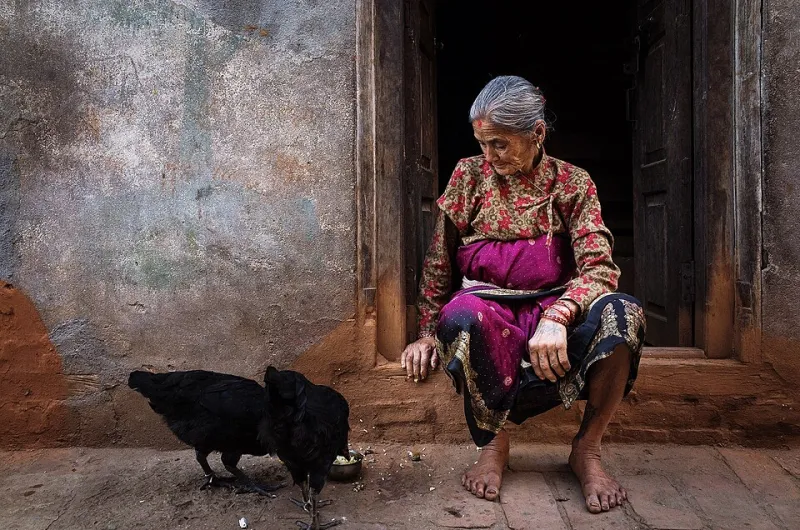
Photo: A Vahanvaty from Dubai, UAE, CC BY-SA 2.0, via Wikimedia Commons
There's a version of yourself you present at work. Another one for your family. One for your best friend, one for a first date, and — if we're being honest — a slightly different one depending on whether you're posting a story or just existing in your kitchen at 11pm eating cereal over the sink.
We know this. We accept it, mostly.
But then came the cultural moment — and it's been going on long enough now to be fully embedded — where the most aspirational thing you could possibly be was authentic. Raw. Unfiltered. Real. And somewhere along the way, "just being yourself" quietly became its own kind of carefully managed identity.
Which raises the question nobody really wants to sit with: if you're performing authenticity, are you actually being authentic?
The Authenticity Industrial Complex
Look around and you'll see it everywhere. The influencer who posts no-makeup selfies — but they're beautifully lit. The CEO who shares "vulnerable" LinkedIn posts about failure — right before a product launch. The friend who announces they're "done pretending" and then proceeds to post about it twice a week.
None of this is necessarily dishonest. But it's also not as unmediated as it looks.
We've built an entire economy around the aesthetic of realness. Authenticity has become a positioning strategy. And the people who are best at it — who seem the most genuine, the most raw, the most themselves — are often the ones who've just gotten really skilled at performing naturalness.
This isn't a cynical read. It's just what happens when any value gets commodified. The moment "be yourself" becomes advice you can Google, it starts to have a template.
The Audience Problem
Here's the thing about authenticity that gets skipped over: you can't actually be authentic in a vacuum. The self you're being "real" about always exists in relationship to someone watching — even if that someone is just future-you scrolling back through your own camera roll.
Psychologists call this self-monitoring, and it's not a flaw. It's just how human consciousness works. We're social creatures. We read rooms. We adjust. The idea that there's some pure, pre-social version of yourself that exists completely independent of context is kind of a myth.
So when someone says "I'm just being real," what they usually mean is: I'm being real for this particular audience, in this particular context, in the way that feels true to the version of myself I want to be understood as.
That's not fake. But it's also not as simple as "no filter."
So What Does Actual Authenticity Even Mean?
I've been thinking about this a lot, and I keep coming back to a distinction that feels useful: there's a difference between performed authenticity and practiced authenticity.
Performed authenticity is when you share the messy thing because it makes you look relatable. When you admit the mistake because it makes you look self-aware. When you drop the "I'm not like other girls" line — whatever form that takes in 2024 — because you've figured out it gets a better response than pretending to have it together.
Practiced authenticity is quieter. It's the choices you make when no one's watching that stay consistent with the choices you make when everyone is. It's less about what you share and more about whether the person you are in public and the person you are at home are actually recognizable as the same human.
One is a communication strategy. The other is just... integrity.
The Lens Is Always There
Here's what I've come to accept: there is no version of self-presentation that exists without some kind of filter. Every single thing we do — how we dress, what we say, what we choose not to say — passes through some layer of awareness before it lands in the world. That's not inauthenticity. That's just being a conscious person.
The problem isn't the filter. The problem is when the filter starts running in the opposite direction — when instead of expressing who you are, it's actively suppressing it. When you're editing out the parts of yourself that don't fit the authentic-person brand you've built. When being real becomes a costume that doesn't quite fit but you keep wearing it because people seem to like it.
That's the version worth questioning.
A More Honest Framework
Instead of asking "am I being authentic?" — which is honestly kind of a trap, because you'll always be able to convince yourself you are — try asking a different set of questions:
Does how I'm showing up feel sustainable? Performances are exhausting. If the version of yourself you're putting forward requires constant maintenance and leaves you depleted, that's useful information.
Am I editing toward myself or away from myself? Curation isn't inherently dishonest. Choosing what to share, how to frame it, what to leave out — that's just communication. The question is whether those choices are moving you closer to who you actually are or further away.
Who would I be if no one was watching? Not as a goal — because someone is always watching, even if it's just you — but as a calibration check. If that person is radically different from the one you're presenting, it might be worth asking why.
Am I being real, or am I being the idea of real? There's a version of vulnerability that's actually armor. There's a version of "I don't care what anyone thinks" that's extremely concerned with what everyone thinks. The self-awareness to tell the difference is genuinely hard, but it's worth developing.
The Part Where I Don't Wrap This Up Neatly
I'm not going to land on some clean conclusion here, because I don't think one exists. The truth is that authenticity and performance exist on a spectrum, and most of us are somewhere in the middle — genuinely trying to be ourselves while also being aware that selves are, to some degree, constructed things.
That's not a failure. It's just the human condition.
What I do think matters is the direction you're moving. Are you getting clearer on who you actually are, or more confused? Are your public and private selves converging over time, or drifting further apart? Is the work of showing up feeling more natural, or are you getting better at faking natural?
Authenticity might be less of a state you achieve and more of a practice you keep returning to. Less about having no filter and more about making sure the filter you're using is actually yours.
Which, when you think about it, is kind of the whole project.