The Algorithm Didn't Give You That Opinion — Did You?
Somewhere between the third time a song showed up on your For You page and the moment you found yourself adding it to a playlist, something slipped. Not the song itself — maybe it's genuinely great. But the path from unknown to beloved got a little shorter than it used to be, a little more assisted, and a little less yours.
That's worth paying attention to.
We're living in the most aesthetically abundant moment in human history. More music, more film, more design, more fashion, more food culture, more visual art than any single person could consume in a hundred lifetimes. And yet — look around. The same five coffee shop aesthetics. The same three Instagram-approved vacation destinations. The same rotating cast of viral sounds and trending outfits and recommended reads.
We have infinite choice, and we keep choosing the same things.
What the Algorithm Is Actually Doing
Here's how recommendation engines work, in the least technical terms possible: they look at what you've engaged with, find other people who engaged with similar things, and surface what those people liked next. It's pattern matching at massive scale, and it's genuinely impressive technology.
It's also, by design, conservative.
Algorithms optimize for engagement, which means they optimize for familiarity. The slightly-different thing is a risk. The truly unexpected thing is a bigger risk. The thing that challenges you or makes you uncomfortable or takes three listens to appreciate? That's almost never what gets surfaced first. You have to go looking for that.
So what we end up with is a feedback loop: the algorithm shows you what people like you tend to like, you engage with it, the algorithm learns that you like things like that, and the circle tightens. Over time, your taste — which should be this expansive, weird, personal thing — starts to look a lot like everyone else's. Not because you have bad taste. Because you've been steered.
Taste Is Not a Majority Vote
There's a particular social anxiety that shows up around aesthetic preferences, and it goes something like this: if a lot of people like something, it must be good. And if you don't like it, something might be wrong with you.
This is the democratization of taste taken to its logical, uncomfortable conclusion. And it's not actually how art works.
The fact that a song has 800 million streams doesn't tell you whether it will mean something to you. The fact that a restaurant has a three-month waitlist doesn't tell you whether the food will make you happy. Popularity is a data point, not a verdict. Conflating the two is how you end up spending your Saturday nights doing things you don't actually enjoy because the collective has decided they're worth doing.
Real taste — the kind that's actually yours — is developed through exposure, reflection, and the occasional willingness to be wrong. It requires you to sit with something long enough to have an actual reaction, rather than outsourcing the reaction to the crowd.
The Courage Part
Here's what nobody tells you about having genuine aesthetic opinions: it requires a certain amount of social courage.
Saying you don't like the thing everyone loves is uncomfortable. Saying you do like the thing nobody's heard of is also uncomfortable, in a different way. There's vulnerability in preference — real preference, not the curated kind. Because when you say this is what I find beautiful or this is what moves me, you're saying something about who you are. And that can feel exposed in a way that agreeing with the consensus never does.
Consensus is safe. It's low-risk. You're never wrong if you like what everyone else likes, because there's no one around to disagree with you.
But there's also nothing particularly you about it.
Building a Taste That's Actually Yours
This isn't a call to be contrarian — liking things specifically because they're obscure is just as much a performance as liking things because they're trending. The goal isn't differentiation for its own sake. The goal is authenticity, which is a word that gets thrown around so much it's lost most of its meaning, but in this context I mean something specific: knowing why you like what you like.
Start by noticing the difference between things that make you feel something and things you've simply been told are good. Both categories exist, and sometimes they overlap. But they're not the same.
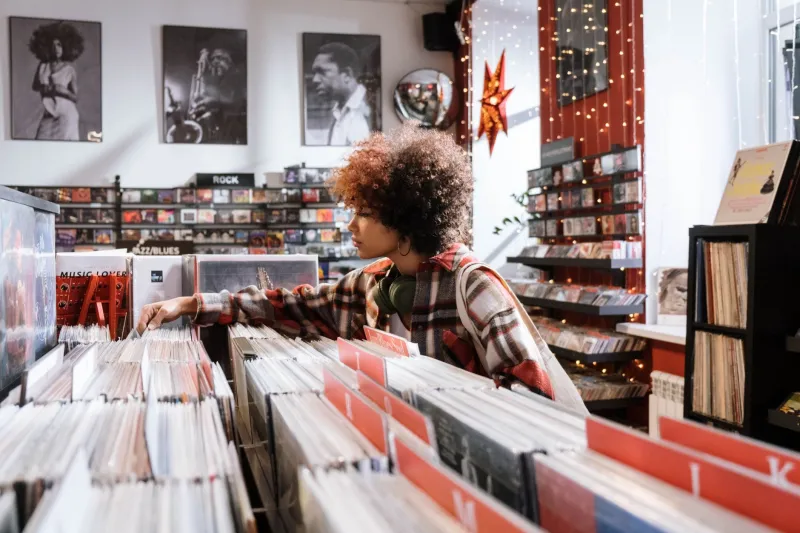
Seek out things that weren't recommended to you. Go to a used bookstore and pick something based entirely on the cover. Listen to the artist that opened for the artist you actually came to see. Try the restaurant that doesn't have a PR team. Give yourself permission to be bored by something critically acclaimed and delighted by something nobody's talking about.
Keep a record, even a loose one, of what you actually respond to. Not what you think you should respond to, not what performed well with your peers — what landed for you, specifically, in your specific body on a specific afternoon. Over time, patterns emerge. Those patterns are your taste.
And then — this is the part that takes practice — defend it. Not aggressively, not with a lecture. Just don't abandon it the moment someone raises an eyebrow. Your aesthetic preferences are not up for a vote.
What You Gain When You Stop Deferring
The payoff for developing real taste isn't that you become more interesting at dinner parties, though that might happen. It's that you start to experience things more fully. When you've chosen something because it actually resonates with you — not because it was pre-selected, not because it was trending — your relationship to it is different. More present. More personal.
Your life starts to feel curated in the best sense of the word: edited with intention, shaped by genuine preference, built around what actually matters to you rather than what the algorithm decided you probably wanted next.
That's worth the discomfort of occasionally liking the wrong thing.