The Scent You Wear Is a Sentence Only You Can Finish
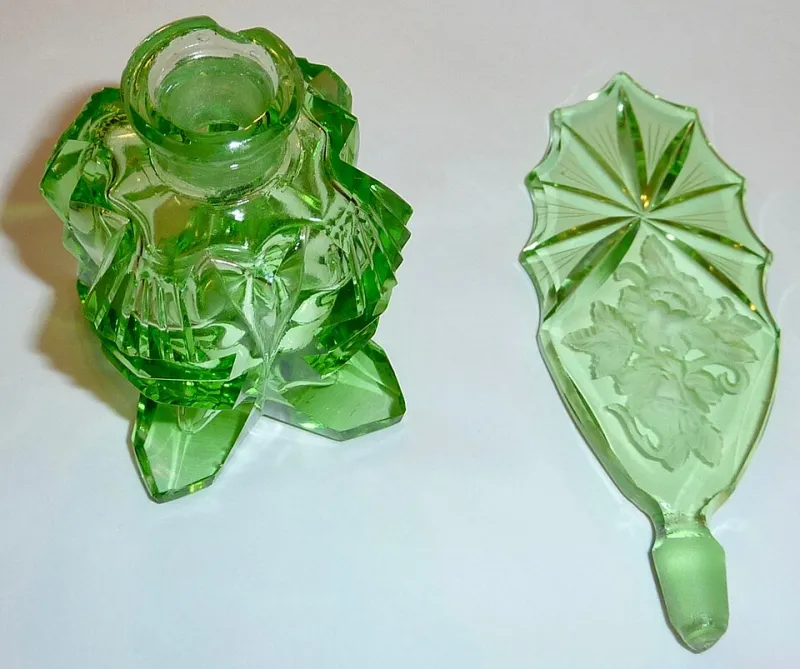
Photo: Tangerineduel, CC BY-SA 4.0, via Wikimedia Commons
Years ago, a friend hugged me goodbye and then stepped back, startled. ‘You smell like my grandmother's garden,’ she said. I had been wearing a cheap fig perfume I bought on a whim. I had no grandmother with a garden. But for a moment, I had borrowed one. That is what perfume does. It does not just sit on your skin. It invites other people into a story.
The problem is that most of us are wearing someone else's story. We buy the scent that went viral on TikTok. We ask for the ‘signature scent’ list. We stand at the perfume counter and let a stranger tell us what we like. And then we wonder why the perfume feels like a costume.
Scent Is Memory Before It Is Taste
Smell bypasses language in a way the other senses do not. It goes straight to the part of the brain that handles emotion and memory. That is why a whiff of chlorine can put you back in a motel pool at age eight. That is why the smell of coffee can make you feel like you are home, even if you are not.
Before you can choose a perfume that feels like you, you have to know what it is made of. Not the notes on the box — the memories. What did your mother's kitchen smell like? What did your first apartment smell like? What did the air smell like on the best day of your life?
I keep a list of scent memories. It sounds precious, but it is not. It is just a note on my phone. Things like: ‘the inside of a cedar chest,’ ‘rain on hot pavement,’ ‘the top of a baby's head,’ ‘a library book that has not been checked out in years,’ ‘my father's car.’ I do not try to translate these directly into perfume. I just use them as a compass. If a perfume makes me feel the way one of those memories feels, I pay attention.
Skin Chemistry Is Not a Myth
You have probably heard that perfume smells different on everyone. That is true, but not in a mystical way. Skin chemistry is real. Your skin's pH, its oiliness, its temperature, and even what you ate for lunch can affect how a perfume develops. A perfume that smells like a clean linen closet on your friend might smell like a wet basement on you. It is not your fault. It is just chemistry.
This is why testing on paper is only the first step. Paper gives you the opening notes, the first impression. But perfume is a story with a beginning, a middle, and an end. You have to let it unfold on your skin. You have to give it time.
The Slow Test
Most of us test perfume the way we test a new restaurant: we look at the menu, we make a snap judgment, we move on. That is not how perfume works. Perfume needs time. It needs body heat. It needs a few hours to show you what it really is.
Here is the slow test I use:
Spray one scent. Not three. Not five. Ask for a sample vial, or spray a single spritz on your wrist. Walk away. Do not buy anything.
Wait twenty minutes. Smell your wrist. What do you notice? Is it sharp? Is it soft? Does it remind you of something? Does it remind you of someone?
Wait two hours. Smell it again. This is the heart of the perfume, the part that matters most. Do you still like it? Does it feel like you? Or does it feel like you are wearing a borrowed coat?
Wait six hours. This is the base. This is what will be left on your skin at the end of the day. If you still like it at six hours, you are onto something.
Live with it for a week. Ask for a sample. Wear it on a Tuesday. Wear it to the grocery store. Wear it to bed. See how it feels in different contexts. A perfume that is perfect for a party might be terrible for a Tuesday.
Build a Small Scent Wardrobe
You do not need fifty bottles. You need three or four that you actually wear. Think of it as a wardrobe, not a collection. A wardrobe has pieces you reach for again and again. A collection sits on a shelf.
A simple scent wardrobe might look like this:
- One everyday scent. Something clean and easy. Something you can wear to work, to the pharmacy, to lunch. It does not have to be boring. It just has to be comfortable.
- One evening scent. Something a little deeper, a little warmer. Something you put on when you are going out, or when you want to feel like you are going out.
- One seasonal scent. Something that feels like a particular time of year. A green scent for spring. A citrus for summer. A woody scent for fall. A spicy scent for winter.
- One wildcard. Something that does not fit any category. Something that you love for no reason. Something that makes you feel like yourself.
Ignore the Viral Lists
The internet is full of ‘signature scent’ lists. The perfume that will make you irresistible. The perfume that will make you mysterious. The perfume that will make you the kind of person who has a signature scent. These lists are not evil. They are just not personal.
A signature scent is not something you choose from a list. It is something that chooses you. It is the perfume that people start to associate with you. It is the perfume that you reach for without thinking. It is the perfume that, when you smell it on someone else, makes you feel a little bit homesick.
You cannot find that by following a trend. You find it by paying attention. You find it by testing slowly. You find it by trusting your own nose.
A Story You Wear
The best perfume is not the one that gets the most compliments. It is the one that makes you feel like yourself. It is the one that tells a story you recognize. It is the one that, when you put it on, makes you stand a little straighter.
So take your time. Ask for samples. Wear a perfume for a week before you buy it. Ignore the lists. Trust your memory. And remember that a perfume is not a costume. It is a sentence. You are the only one who can finish it.