Why the Worst Seat in the Room Made My Night
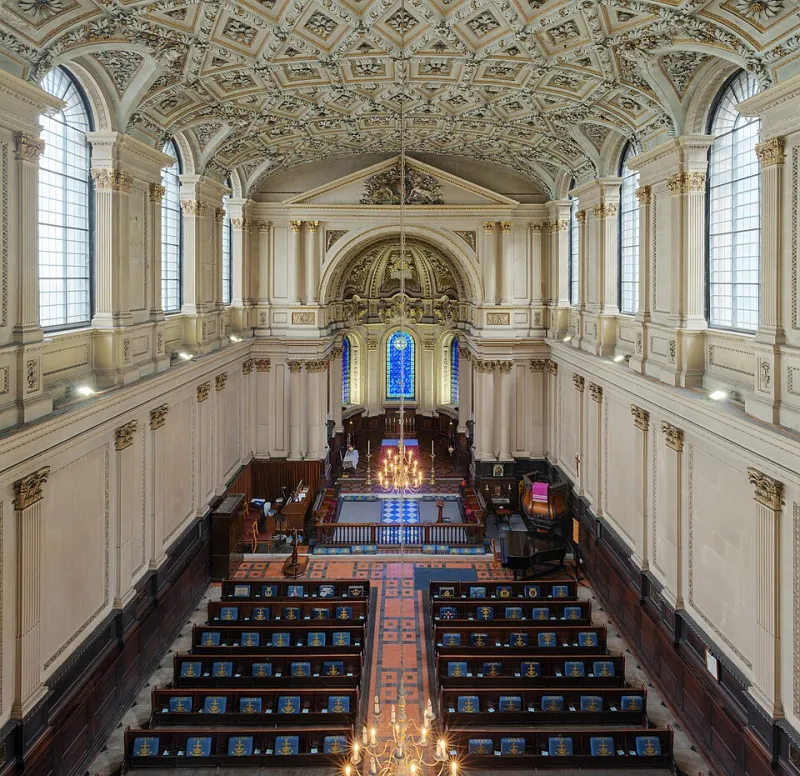
Photo: Diliff, CC BY-SA 3.0, via Wikimedia Commons
The seat was technically in the theater. That's about all you could say for it. Row Q of the balcony, far left, with a safety rail that cut across the stage at roughly the height of an actor's chin. I bought it four hours before curtain for twenty-seven dollars because a friend's plans fell through and I didn't want to sit home being noble about it.
For the first ten minutes I was annoyed. Then something shifted. I stopped trying to see everything, and started noticing things.
From up there I could see the whole architecture of the show — the exits the actors used, the stagehands in black waiting behind the flats, the way the lighting design pushed the audience's eye around the room. I could see the audience itself: three hundred people leaning forward in unison, breathing together. There was a couple near the front who held hands through the entire second act. There was a kid who laughed two beats before everyone else, and the wave of laughter that followed him.
None of that is visible from the good seat. The good seat puts you in the middle of a story. The bad seat lets you watch a thing being made.
The optimization problem
We've gotten strange about seats. There are apps for this now — seat maps with reviews from previous ticket holders, sightline photos, warnings about columns and overhangs. I understand the impulse. Tickets cost real money, and nobody wants to feel foolish in row Q.
But somewhere between wanting a good view and needing the optimal view, we've turned a night out into a procurement exercise. We triangulate: best price, best angle, best row, best time. We compare six options and pick the fifth-best one anyway and then spend the first act wondering about the sixth. (This is not a live-entertainment problem. It's an everything problem, and live entertainment is just where you notice it.)
And then there's the photograph. There's always the photograph. Half the room's phones come out in the final ten seconds, and everybody stands there holding a rectangle of light, watching the moment through something they're going to watch later.
What the back row knows
The people who make the work have known a version of this for a long time. Ask anyone in the touring business and they'll tell you: the back of the house is often where the mix was dialed in. It's not that the sound is better or worse up there — it's that up there you hear it as a whole instead of as a series of instruments hitting you in the chest.
I've seen big shows from the cheap seats that I've thought about for months, and expensive shows from near the stage that I could not describe to you now. Comfort isn't the same as impact. Being close is not the same as being present.
And the crowd is different in the cheap seats. Families with kids. People who saved for the ticket. People who are there because they really wanted to be, rather than because someone handed them a corporate pair. There's a level of investment up there that you can feel.
How to make the imperfect seat work for you
Buy the last-minute ticket on purpose. Rush tickets and lotteries exist for exactly this. If you stop asking "is this the best seat in the house?" and start asking "is this a good enough reason to go out tonight?" — a lot of expensive doors swing open at a reasonable price.
Say yes to the obstructed view. Seriously. The restriction is usually narrower than you think. And there's something oddly restful about not being required to see everything. You fill in the gaps with your own imagination, which is work your brain is very good at and rarely gets asked to do anymore.
Put the phone away. I'm not going to lecture you about this at length, because the lecture never works. But: the trade you make when you raise the phone is that you get a record of the moment instead of the moment. In the cheap seat, especially, there's nothing to prove. Just sit there and let it be imperfect.
Leave before the encore or don't. Both are valid. The absolute wrong move is jockeying for the aisle during the last song and making four people in your row stand up while the artist is singing something meaningful. Pick your exit. Commit.
Stop re-booking. If you loved it, go again. Sit somewhere completely different. The show you see from row Q is a different show from the one you'd see in the third row, and neither of them is the real one.
What I remember
I couldn't see the top of the set from that balcony seat. I couldn't see the actor's face during the final monologue — just his hand, lit from below, and the shape of everybody around me leaning in.
It was the best night out I had all year. Not in spite of the rail across the view, but partly because of it. Somewhere in that two and a half hours I stopped evaluating the evening and started being in it. Twenty-seven dollars, an obstructed sightline, and one small lesson in letting the perfect be the enemy of the good.
Go see something from the nosebleeds. Leave a little room for the room to surprise you.