Your Handwriting Is the Only Font That Still Belongs to You
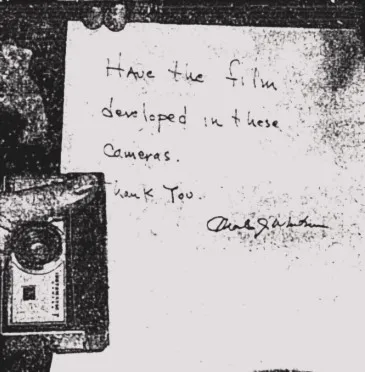
Photo: Press photographer., Public domain, via Wikimedia Commons
Last week I bought a box of cards at a museum gift shop. They were not fancy — thick paper, a little texture, a color somewhere between cream and pale gray. I had no occasion in mind. I just wanted to have them on hand, the way I keep a good pen on my desk or a clean towel in the guest bathroom. A small readiness for something human.
That is the thing about the handwritten note. It has a reputation problem. It gets filed under nostalgia, next to landline phones and printed newspapers, as if wanting to write something by hand means you are trying to return to 1987. But the note is not a museum piece. It is a style choice. And like most style choices worth making, it is about intention, not decoration.
The Message That Waits for You
A text arrives and asks for an answer now. An email sits in an inbox and asks to be processed. A handwritten note does neither. It waits in a mailbox, then on a counter, then in a stack of mail next to a stack of bills. It asks for a different kind of attention. You have to open it. You have to hold it. You have to read someone’s actual handwriting, which is a little like hearing their voice after weeks of only reading their messages.
I have a friend who sends thank-you notes after dinner parties. Not emails. Not texts with a heart emoji. Notes. They are never long. Usually three sentences. One says what she ate, one says something she noticed about the evening, and one says thank you. The first time I received one, I was almost embarrassed by how much it mattered. It was not the paper. It was the evidence that she had sat down, after the dishes, and thought about the night again.
That is the part we lose when we only text. The second pass. The moment when you decide what the evening actually was, and then say it back to someone.
What a Pen Does to a Thought
Writing by hand slows a sentence down. That is not a small thing. When I type, I can revise as I go. I can delete a clause before it fully exists. I can make a message smoother than I am. When I write by hand, the sentence arrives with its own weather. My letters lean. My margins get crowded. I cross things out. I sometimes write the same word twice because my brain moved faster than my wrist.
And that is exactly why the note works. It is not a performance of perfect thought. It is a record of actual thought. The crossed-out line is not a flaw. It is the point. It says: I changed my mind here. I tried to say this better. I kept going.
We are surrounded by messages that have been edited into politeness. The perfectly drafted reply. The carefully softened email. The text that has been read three times before sending. None of that is bad. Manners often require editing. But there is a difference between being considerate and being untouchable. A handwritten note is touchable. It has pressure marks. It has a smudge. It has a slightly crooked line because you were writing on your knee at the kitchen table.
The Crossed-Out Line Is the Point
I am not arguing that every message should be handwritten. That would be impractical and, honestly, a little exhausting. I am not going to write by hand to my dentist. But I am arguing that we have quietly eliminated a whole category of communication: the message that costs something without being dramatic.
A stamp costs less than a coffee. The time costs maybe ten minutes. But the choice says something. It says: this person is not getting the fastest version of me. They are getting the version that sat down.
There is also a social generosity to it. A handwritten note does not demand a reply. It does not light up a phone. It does not sit in a thread waiting to be acknowledged. It arrives, it is read, and then it is allowed to exist. In a culture that treats every message as a task, that is almost radical.
A Small Ritual With a Long Shelf Life
I keep a short list of people I owe notes to. Not because I am virtuous. Because I forget. I put the cards where I can see them, near the coffee maker, and I keep a pen that does not skip. When I have five minutes, I write one. I do not wait for a big occasion. I write after a friend sends me a book recommendation. I write after someone checks in on a hard week. I write after a dinner where the conversation went longer than the food.
The notes are not literature. Some of them are barely more than a sentence. But they do something that a text cannot do. They turn a feeling into an object. They make gratitude a little less abstract. And they give the other person something to keep, which is a strange and lovely thing in a world where almost everything disappears into a screen.
Start With One Person, One Card
If you want to bring the handwritten note back into your life, do not start with a stationery haul. Start with one person and one card. Pick someone who did something small for you recently and did not make a big deal of it. Write three sentences. Do not worry about your handwriting. Do not worry about saying it perfectly. The imperfection is not a concession. It is the style.
The note is not the last thing you own that nobody can edit. It is the last thing you own that nobody can edit for you. That is the difference. A handwritten note is yours — the slant, the pause, the crossed-out word, the slightly too-small margin. It is the only font that still belongs to you.
And in a world of drafts, that is worth putting in the mail.