You'll Tell a Stranger Everything — But You Won't Return Your Mom's Call
Somewhere between the rise of the personal essay and the invention of the Stories feature, a quiet inversion happened. We started treating the internet like a confessional and our actual relationships like something we'd get to eventually. We overshare with audiences and undershare with the people who have our emergency contact information.
If you've ever typed something vulnerable into a caption that you haven't said out loud to your best friend, this is for you.
The Intimacy Loophole We All Found
There's a reason it feels easier to be emotionally raw with strangers. When you post something personal online, you control the edit. You pick the words. You choose the photo. You decide when to respond to comments — or whether to respond at all. The vulnerability is real, but the risk is managed.
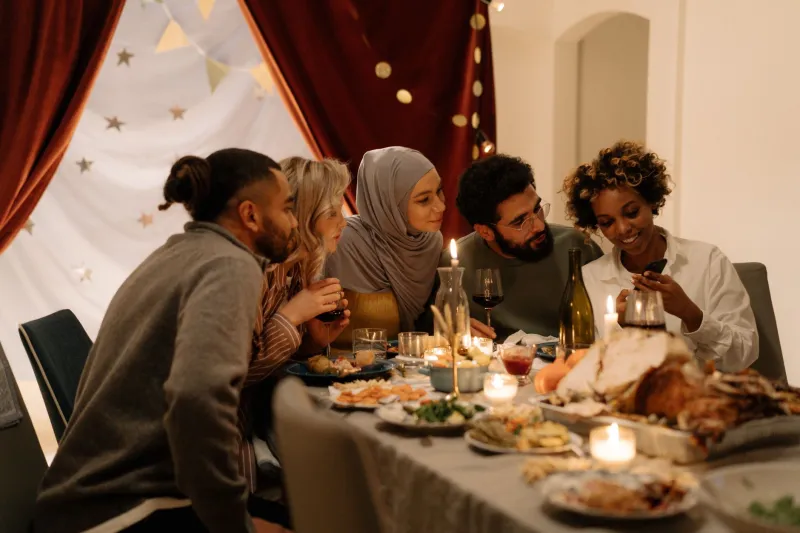
Telling your sister that you're struggling? That's a live conversation. She might cry. She might say the wrong thing. She might bring it up at Thanksgiving. There's no delete button on that.
Digital intimacy gives us the emotional release of being known without the actual exposure of being known. And once you've experienced that trade-off, the old kind of closeness — the messy, unpredictable, face-to-face kind — starts to feel like too much work.
Psychologists call this parasocial intimacy, but honestly, it's simpler than that: we found a loophole, and we've been using it ever since.
Why Your Inner Circle Is Getting the Worst Version of You
Here's the uncomfortable part. The people who love us most are often the ones we're least honest with. Not because we don't trust them, but because the stakes are higher. A stranger online can't be disappointed in you in a way that actually matters. Your college roommate can.
We perform wellness for audiences and perform fine for the people who knew us before we figured out our aesthetic. We narrate our healing journeys publicly and then show up to family dinners acting like everything's normal because it's easier than explaining what we've actually been going through.
Over time, this creates a gap. The people closest to you are working with outdated information. They know who you were, not necessarily who you're becoming. And because we never quite bridge that gap — it's always something we'll do when we have more time, more energy, the right moment — the distance becomes the default.
The Performance of Vulnerability
Here's something worth sitting with: sharing something personal online isn't the same as being vulnerable. Vulnerability, in the real psychological sense, means risking something with someone whose opinion of you actually shapes your life. It means saying the hard thing to your partner at 10pm when you're both exhausted, not crafting a thoughtful thread about it for strangers.
Brené Brown has talked about this for years, but it still hasn't quite landed in the age of confessional content. We've mistaken the performance of openness for the practice of it. We've gotten really good at looking emotionally available while being genuinely unavailable to the people who want to actually reach us.
And the tricky part? It feels good. Getting seen and affirmed by an audience is a legitimate dopamine hit. It scratches the itch of connection without requiring you to be inconvenient to anyone you'll see at Christmas.
What We're Actually Losing
The cost of this pattern is slow and easy to miss. It shows up as friendships that feel surface-level even after a decade. Relationships where you talk all the time but never really say anything. Family members who feel like they don't know you anymore — and maybe they're right.
Deep relationships require a kind of ongoing maintenance that doesn't look dramatic. It's the boring, unglamorous work of being honest when it's awkward, following up on the hard conversation you had last month, admitting that you're not okay to someone who will actually do something about it. None of that is postable. None of it gets engagement. But it's the stuff that makes you feel less alone in a way that no comment section ever will.
There's also something we lose in ourselves. When you only practice intimacy in its managed, edited form, you start to lose the muscle for the real thing. Real closeness requires tolerating discomfort — theirs and yours. It requires letting someone see you in a way you didn't script. If you only ever share on your own terms, you're not really sharing. You're broadcasting.
How to Start Closing the Gap
None of this means you have to delete your accounts or stop writing honestly about your life. But it might mean asking yourself a few questions:
Who in your life is working with outdated information about you? Is there someone who still thinks you're fine because you never corrected the record?
What have you shared publicly that you haven't shared privately? If your followers know something about your mental health, your relationship, your career anxiety — and your closest friends don't — that's worth noticing.
When's the last time you were truly inconvenient to someone who loves you? Not in a dramatic way, but in the way that real relationships require — where you needed something and you actually asked for it, in real time, without editing yourself first.
The people who love you aren't your audience. They're your people. And they deserve the unfiltered version — not because they've earned it through follower count, but because that's what love actually is. It's being known without the caption.
Start there. Return the call.